By Eefje van Esch, Advocacy Coordinator, Hivos
Financing for development has long been conceptualized as an abstraction. It relates to how the world finances its efforts to end poverty, improve the well-being of its citizens through better health and educational systems, protect the planet and address climate change, and develop more equitable economies. Financing for development includes taxes, fiscal policies, aid, trade, private finance, and debt. These are the basics.
However, at the 2026 Financing for Development Forum in New York at the end of April, it was impossible to approach this agenda with objectivity or purely from a technical point of view. Against the backdrop of ongoing wars and militarization, rising debts of countries, rapid climate degradation, and the closing of civic spaces around the globe, financing for development feels far less like a budgeting problem and far more like a struggle over power: who sets priorities, whose lives count, and who ultimately pays the price when global systems fail.
This tension ran throughout the entire Forum. Nine months after the Fourth International Conference on Financing for Development (FfD4) in Sevilla and the adoption of the Sevilla Platform for Action (SPA) – the SPAs are an initiative launched by the Spanish government to accelerate progress beyond the agreed outcome document – this should be a time for reflection. On paper, progress looks promising. Gender-responsive finance is mentioned extensively. Care, public finance reform, and inequality are firmly on the agenda.
However, we all know from our experiences over many decades that words do not redistribute wealth or power. And that statement is becoming painfully relevant. It cannot be denied that the Sevilla FfD4 did open some political spaces. Since then, there have been new discussions on care systems, gender budgeting, debt, and fiscal reforms. However, since then, the international context has taken a marked turn for the worse. Debt repayments are devouring budgets. Official Development Assistance flows plummeted in 2025. And conflicts are escalating as trust in multilateralism fades.
In light of this situation, it is difficult to make any progress. Too many responses still prioritize private finance-first approaches and risk-based models that deepen global inequalities rather than address them. Long-overdue reforms of institutions like the IMF and World Bank remain slow, contested, and politically blocked. The gap between words and reality increases, and those in the Global South are disproportionately hit by the impact of it.
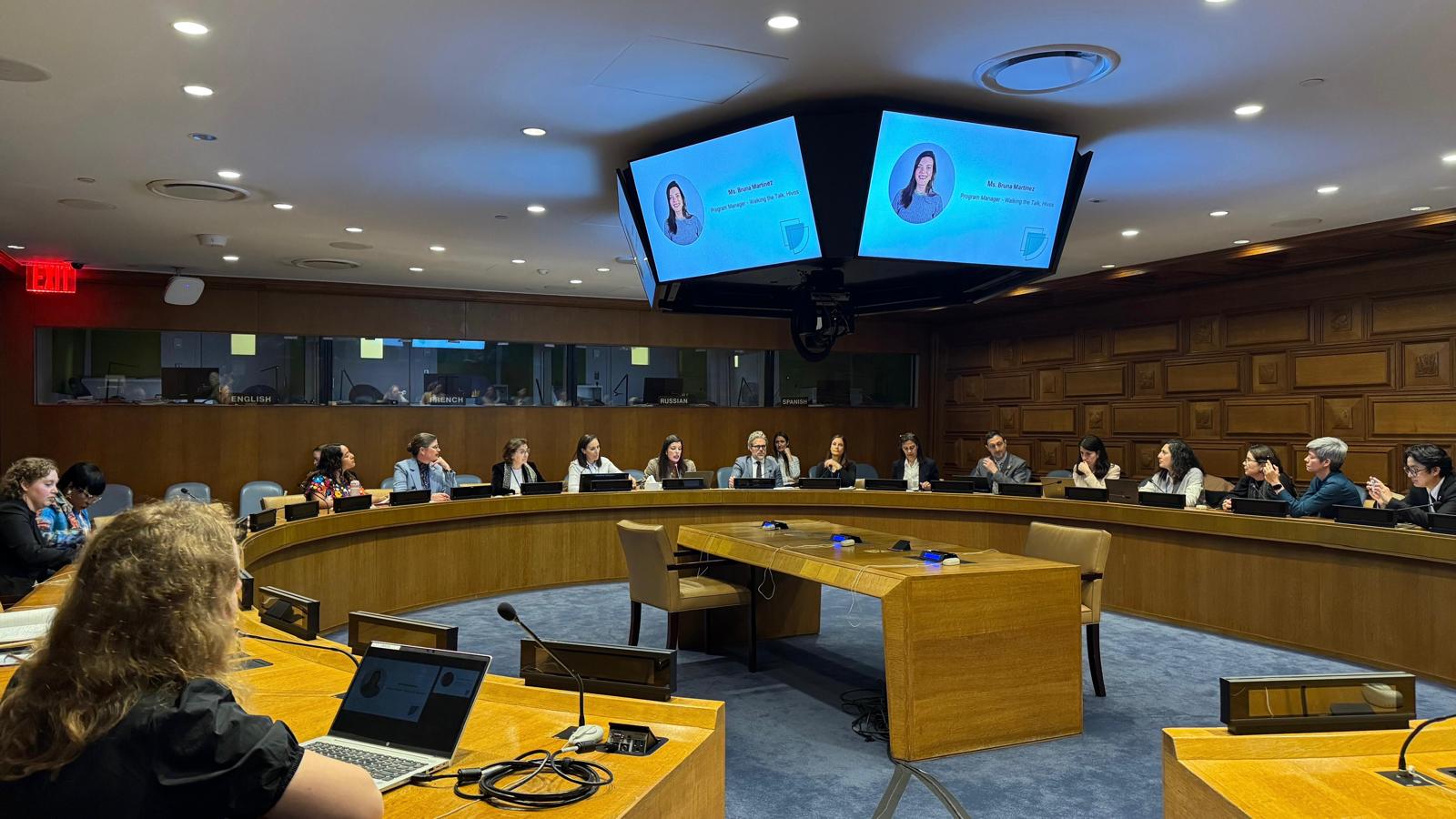
For me, the most significant aspect of the week came from the role that Hivos, as part of Walking the Talk, played in resisting this tendency. Not only were we participants at the forum, but we also strove to set the feminist agenda there to make sure gender-financing was paid due attention amidst all the political discussions. By co-organizing the official side event “A Post FfD4 Assessment of Financing for Development and Gender Equality: Advancing the Sevilla Platform for Action Initiatives,” we helped create a space where difficult conversations could happen and financing for gender equality stayed on the map.
Most significantly, this included the willingness of some governments to challenge established conventions. So conversations included topics such as adolescent pregnancy, financing gender equality, and the need for ongoing investment in the care system. Representatives from UN bodies explained concrete initiatives their organizations have taken to promote implementation. And they didn’t deny the limitations and lack of progress brought by political considerations or avoid the issue of reforming the UN itself.
What became clear during these discussions is an insight already long held by feminists – gender equality cannot be achieved using scattered pilots and voluntary commitments. What is needed is concerted public policy action, reforms, and political determination. Otherwise, you just perpetuate existing inequalities.
Unfortunately, the Forum did not succeed in addressing these concerns satisfactorily. The outcome document is another manifestation of typical political restrictions with overly cautious formulations, shared responsibility (and therefore taking none), and goals that do not match the reality of today’s world. Although this was disappointing, it wasn’t unexpected.
At the same time, I left the Forum with cautious determination. Social movements cannot wait until the authorities permit them to act. Time and again during the week, feminist perspectives helped broaden the dialogue into spheres far removed from mere technocracy. And even some governments decided to act despite all the obstacles. The most progressive stand was taken by Nordic states, Latin America, and Southern Europe.
The problem financing for development faces is not a lack of solutions. It is the imbalances in global power distribution. The question now is not whether we know what needs to change, but whether those with power are willing to follow the leadership that is already there.