
Financing for Feminist Futures (F4FF) Conference
At the Financing for Feminist Futures (F4FF) Conference that took place in Madrid in October 2025, Walking the Talk brought together different stakeholders to improve cross-sector collaboration and support movement strengthening.
We created a safe space to strategize how we could work together to protect the current resources & funding for both gender equality broadly and feminist movements and identified new possibilities to resource feminist movements.
Throughout our three-day journey, participants were invited to move through the conference in ways that felt natural and intuitive. They could stroll between Plenaries, Learning Huddles, Concurrent Sessions, Care Sessions, and hands-on Artivism, each offering a different way of learning, connecting, and reflecting.

Discover the conference program
F4FF was packed with powerful sessions, strategic meetings, hands-on workshops, and networking events – all rooted in our shared commitment to reimagining funding through a feminist lens.
- Explore the full program in English
- Découvrez le programme complet en Français
- Explora el programa completo en Español
At F4FF, we
- Explore strategies that improve cross-sector collaboration to strengthen financing for gender equality and feminist movements in the Global South.
- Identify strategies to protect current resourcing for gender equality and feminist movements in the current context.
- Identify new possibilities and emerging strategies to resource feminist movements.
Plenaries
Learning Huddles
Concurrent Sessions
Research Projects
Walking the Talk launched “The Architecture of Change: Feminist Pathways to Financing Gender Equality” – 13 bold research projects to explore and offer tangible solutions to today’s financing challenges. A must-read, because reimagining global financial architecture has never been more urgent.
The research teams presented their findings at the F4FF Conference too.
A Feminist Unconference
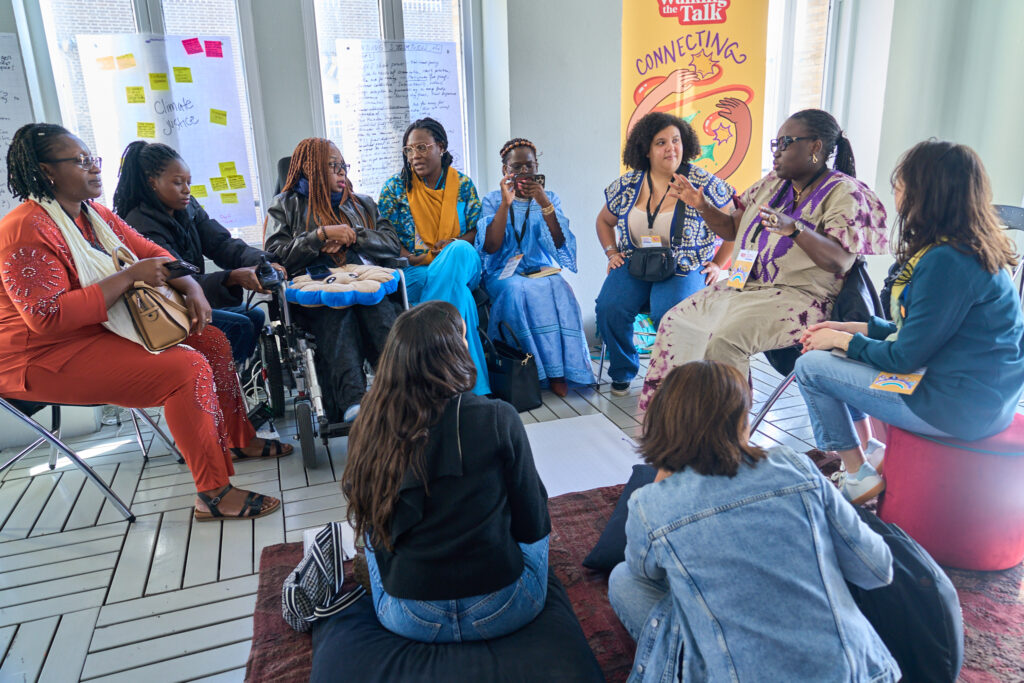
Grounded in a decolonial feminist approach, the conference was deliberately designed as an “unconference”, organized around shared reflection, care practices, collective resistance, visionary thinking, and transformative worldbuilding. Hosted by Ishita Chaudhry and Bhawna Khattar, two experienced advisors from the Majority World with longstanding trajectory in weaving feminist gatherings, feminist methodologies were at the center of F4FF, as a space meant to hold opportunities for interaction and collective building, rather than passive participation. Our framework was built to ensure that voices from the Majority World would not only be present, but deeply prominent throughout the entire conference. Above all, we aimed to create a space allowed to be imperfect, rooted in solidarity and care, imagined to be safe and with the capacity to spark connection at its very core.
Why Madrid?
By locating the conference in Spain, we positioned F4FF in direct continuity with the FfD4 held in Seville just a few months earlier, creating a bridge between global financing commitments and feminist accountability. Spain offered a unique political and symbolic advantage: it is currently a key arena where important decisions on Gender Equality and Women’s Rights are being shaped. Hosting F4FF in Madrid also strengthened the trajectory leading to the next Feminist Foreign Policy Ministerial, set to take place in Madrid in 2026.
The venue
Choosing La Casa Encendida as the home for our feminist cosmos was more than a logistical decision, it was a symbolic and political one. La Casa Encendida carries a rich history of community resistance and artistic experimentation. Born as a project committed to social justice, creativity, and collective learning, it embodies values that deeply resonate with the ethos of F4FF. By gathering in a place that has continuously nurtured grassroots expression and collective organizing, we ensured that the conference unfolded within a living ecosystem of care and transformation. The venue itself became part of our feminist methodology: a rebellious home for debating and imagining feminist futures.
The catering
Aware of the symbolism of gathering people around food, we wanted to partner with an organization that goes beyond just catering. Lakook is a project that creates real opportunities for refugees and migrants rebuilding their lives in Spain. By inviting Lakook to cook for F4FF, we wanted the meals to reflect the political perspectives of the conference itself. Their presence reminded us that feminist resourcing also means supporting initiatives that open doors and honor the journeys of those who courageously cross borders in search of new opportunities.
Artivism
Migrantes Transgresorxs brought artivism to life at F4FF. Their work aligns with our commitment to center voices, bodies, and struggles from the Majority World and racialized communities. By bringing an intersectional collective of migrant, racialized, Black, Indigenous-descendant, and LGBTQ+ people into F4FF, we grounded the conference in lived diasporic knowledge, ensuring that feminist futures were not only discussed but also present, felt and co-created. Their presence helped shape the space, reminding us that feminist resourcing is an intersectional matter inseparable from migrant justice, anti-racist struggle, and the creative power of communities who transgress and rebuild.
Visual Identity
Intentionally choosing to collaborate with, and platform, artists whose work aligns with our values, the visual identity of F4FF was rooted in a decolonial feminist ethos – a feminist cosmos of care, resistance, imagination, and worldbuilding – created by Sonaksha Iyengar, a South Asian queer illustrator. Their practice explores themes of care, body image, and gender, and engages deeply with disability justice, mental health, and intersectional feminism, using art as a political and imaginative tool, contributing to and participating in social and climate justice movements across the world.
Have a look at all the Walking the Talk artwork.
Poetry
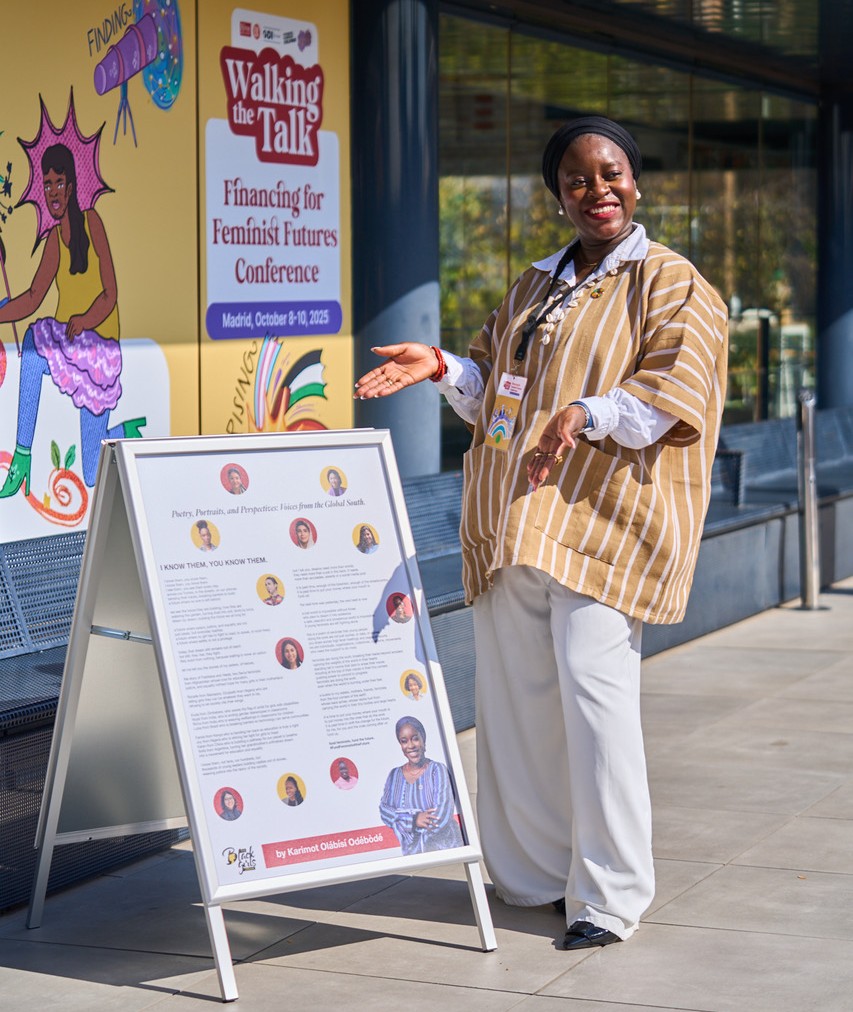
Karimot Olábísí Odébòdé, a Nigerian lawyer, poet, education advocate, and founder of the Black Girl’s Dream Initiative, impressed the F4FF audience with her poem “I Know Them, You Know Them”. Odébòdé uses poetry as a means of advocacy. Through her work, she challenges inequitable funding systems and showcases creative, participatory models that prioritize equity, care, and grassroots leadership.
Financing for Feminist Futures Conference is powered by



Our mediapartner

In collaboration with