
Architects of change
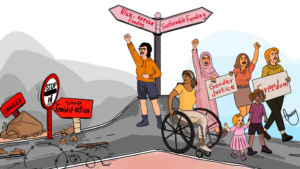
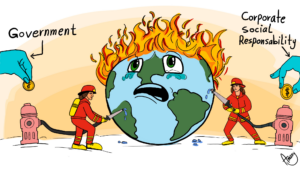
The world is at a pivotal point. Feminist movements and women’s rights organizations across the majority world are facing simultaneous crises from declining civic space, funding reductions, growing authoritarianism, and the fast-paced impacts of climate breakdown. Meanwhile, the global discussions that will influence how resources are allocated are being shaped mostly without the voices of those most affected by their results. This collection Research Projects responds directly to that contradiction.
The Architecture of Change: Feminist Pathways to Financing Gender Equality collates the work of 13 research teams, comprising 39 researchers, exploring feminist financing landscapes across more than 30 countries. It is not a compilation of policy documents created distantly from lived experiences. Instead, it is a body of knowledge developed from within the communities, movements, and systems it studies, with a clear political aim: to disrupt, inform, and mobilize.
A different kind of research
The development and academic sectors still follow a global hierarchy that favors knowledge created in the minority world, within elite institutions, while systematically undervaluing the epistemologies and lived experiences of the majority world. This is not accidental; it is a colonial legacy that continues to influence whose analysis reaches policymakers, whose evidence informs funding decisions, and whose priorities shape the international agenda.
Walking the Talk was designed to challenge that hierarchy directly. Instead of commissioning research from established institutions or imposing fixed frameworks for teams to follow, the initiative entrusted research design, direction, and ownership to researchers from the majority world. Teams set their own questions and pursued lines of inquiry based on community needs, movement demands, and contextual urgency, not donor preferences. The consortium and technical partners served as facilitators and thought partners, providing methodological support without controlling the agenda. This shift from oversight to solidarity was not just procedural; it was political.
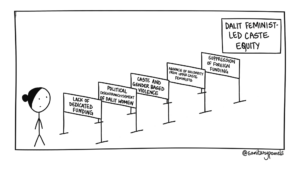
What results is a body of work that is both rigorous and contextual, analytical and practical. Across 13 studies, the researchers gathered here have examined feminist funding ecosystems in Central Africa, challenged foreign funding restrictions in Kenya, India, and Bangladesh, explored the intersection of climate finance and feminist organising, investigated debt swap mechanisms as tools for gender equality, traced the silencing effect of defunding on feminist civic space, mapped pathways for Dalit feminist-led movement building in South Asia, and much more. Together, they do not simply describe the landscape of feminist financing; they reveal its fault lines and point towards the structural changes needed to mend them.
What you will find here
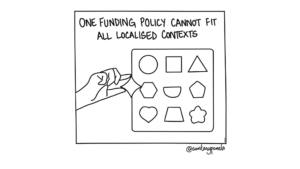
Each study in this collection is intentionally context-specific. They follow different approaches, employ various methods, and offer different recommendations. This diversity is a strength, not a weakness. Feminist financing cannot be addressed with universal blueprints imposed from above; it demands localized knowledge that understands how power, history, and politics influence the flow of resources in specific places and communities.
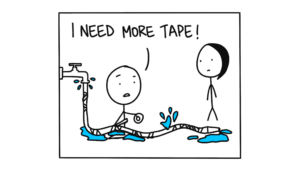
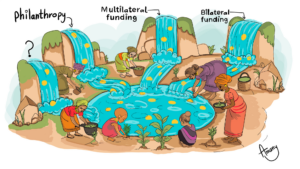
Despite this diversity, common themes emerge. Researchers consistently highlight the shortcomings of short-term, restrictive, and conditional funding for feminist organizations. They record the practical and political harm caused by funding cuts or restrictions. They identify how mainstream financing frameworks, despite good intentions, can perpetuate the exploitative logics they aim to dismantle. They also suggest alternatives: innovative financing methods, reform of ODA structures, enhancing local fiscal capacity, and philanthropy focused on trust and solidarity. Collectively, these studies offer not just a diagnosis but a framework, a set of interconnected insights and demands, from which more equitable systems can be developed.